
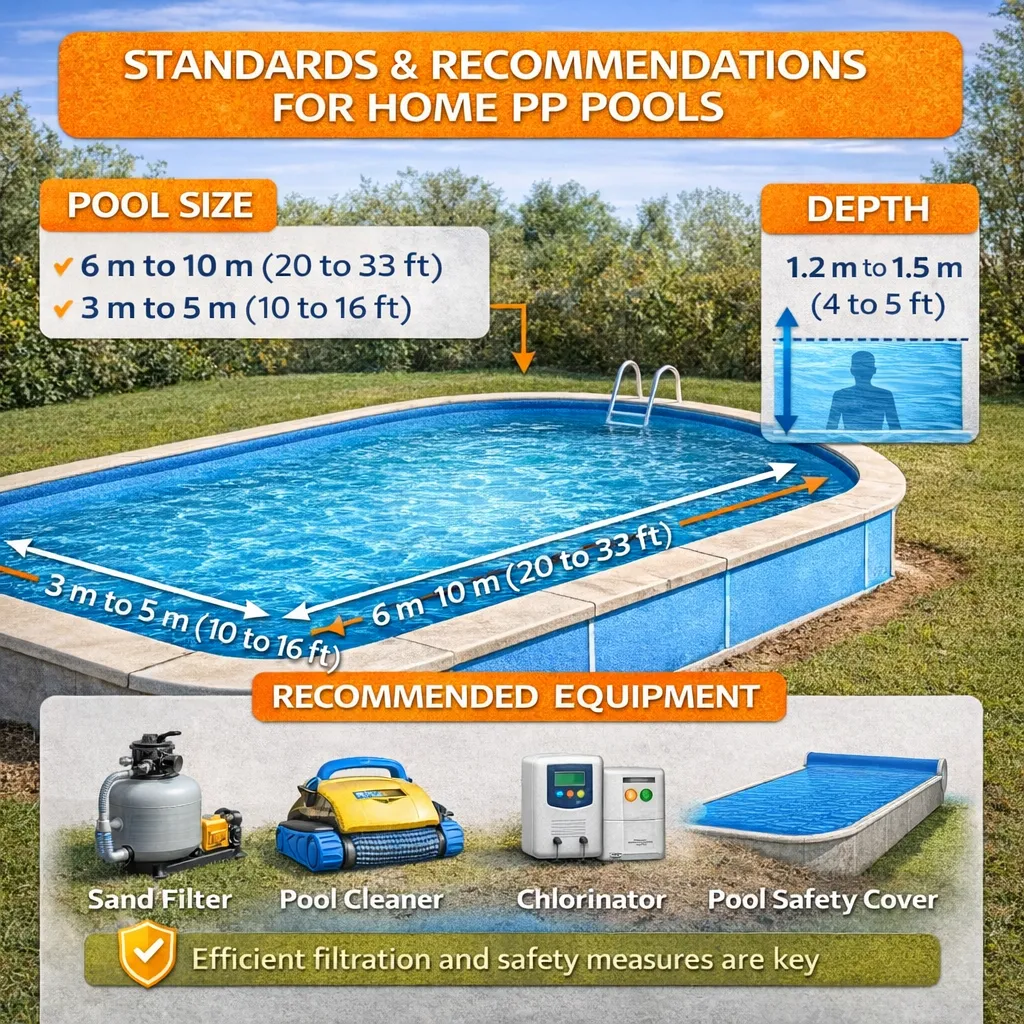
A home PP (polypropylene) pool should be tailored to the real needs of the household, the available space, and the intended use. There is no single "ideal" size for everyone, but there are well-proven standards and recommendations that ensure safety, comfort, and long-term functionality.
Recommended dimensions for home PP pools
Dimensions depend on the number of users, intended use, and available space. The most commonly used dimensions for family pools are:
6 × 3 m – a compact pool for a family with children,
7 × 3.5 m – a good balance of swimming and play,
8 × 4 m – a common choice for larger family gardens,
9 × 4 m and larger – for more serious swimming and a greater number of users.
Recommended pool depth
Pool depth directly affects safety and comfort. For home PP pools, the following solutions are most commonly applied:
1.20 – 1.35 m – ideal for families with children and recreational bathing,
1.40 – 1.50 m – a universal depth for adults,
combined depth or gentle slope – a compromise between play and swimming.
Flat bottom or gentle slope
For most private pools, a flat bottom or a very gentle slope is recommended. This makes use, cleaning, and safety easier, particularly for children.
Essential standard equipment
skimmer or overflow system (depending on the pool type),
return inlets correctly distributed,
pump and filter correctly sized to the water volume,
steps or entry elements.
Optional equipment as required
heating (heat pump or heat exchanger),
thermal cover or roller system,
automated pH and disinfection control,
lighting (white LED),
bench seating, sun shelf, or hydrotherapy jets.
Safety recommendations
non-slip surfaces around the pool,
fencing or access control where children are present,
clear rules of use.
Conclusion
Standards for home PP pools are not rigid regulations but well-proven recommendations. The right dimensions, a moderate depth, and correctly chosen equipment make the pool safe, functional, and cost-effective in the long term. The best solution is one that is tailored to the family, the available space, and real usage patterns.