
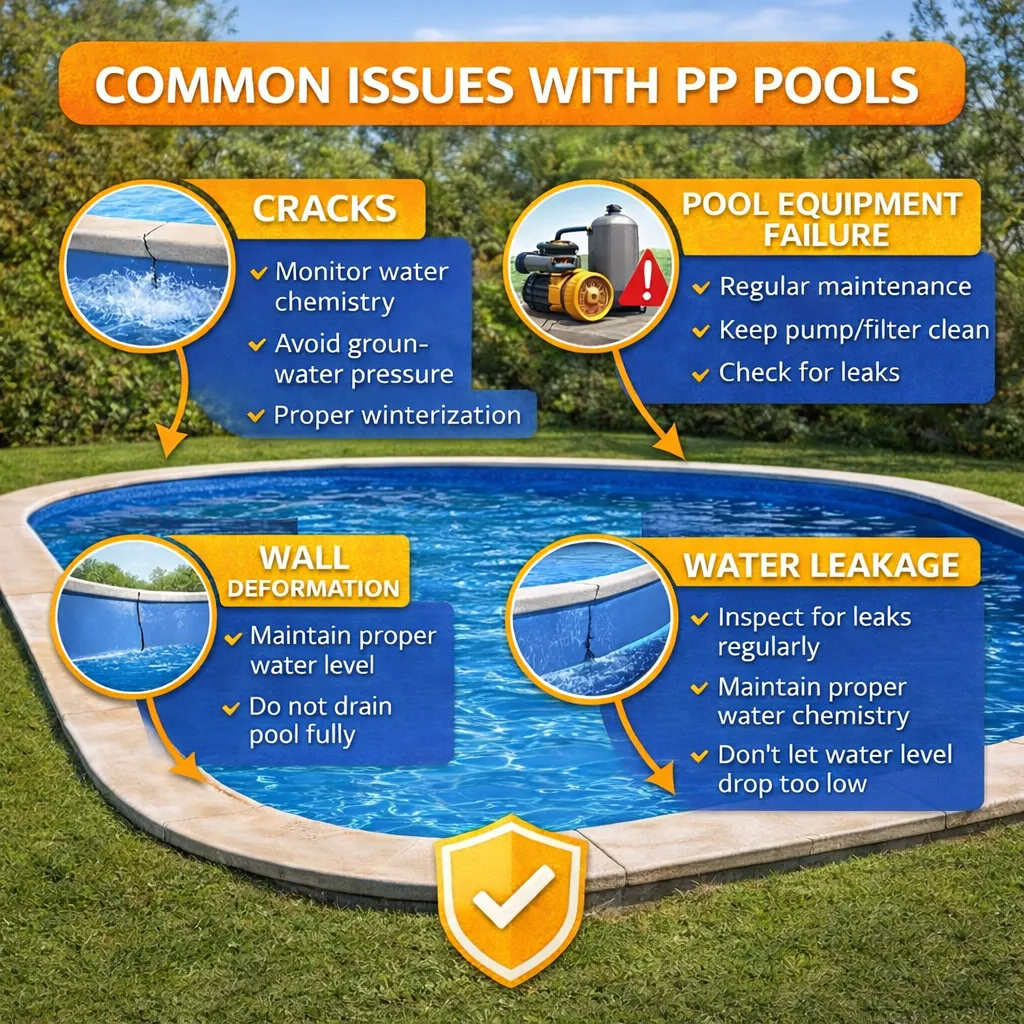
PP (polypropylene) pools are highly reliable when properly manufactured and installed. In practice, most “failures” do not occur on the PP shell itself, but on equipment, plumbing, and built-in components. The good news is that most problems are preventable with correct design, professional installation, and routine maintenance.
Common issues
leaks around fittings (skimmer, returns, lights, drains),
pump problems (air in suction, low flow, noise),
dirty filter and unstable water quality,
salt electrolysis cell scaling and errors,
heating problems due to poor flow or wrong hydraulics,
poor circulation (dead zones) leading to algae,
structural issues from incorrect installation or groundwater.
How to prevent problems
Use quality components, ensure proper sealing and stress-free plumbing, maintain stable pH and sanitizer levels, run filtration adequately, backwash the filter regularly, and use a thermal cover for heating efficiency. Professional installation with drainage and correct backfilling is essential.
Conclusion
Most PP pool issues are equipment-related and preventable. With good installation and consistent maintenance, PP pools remain stable, reliable, and low-stress throughout the season.