
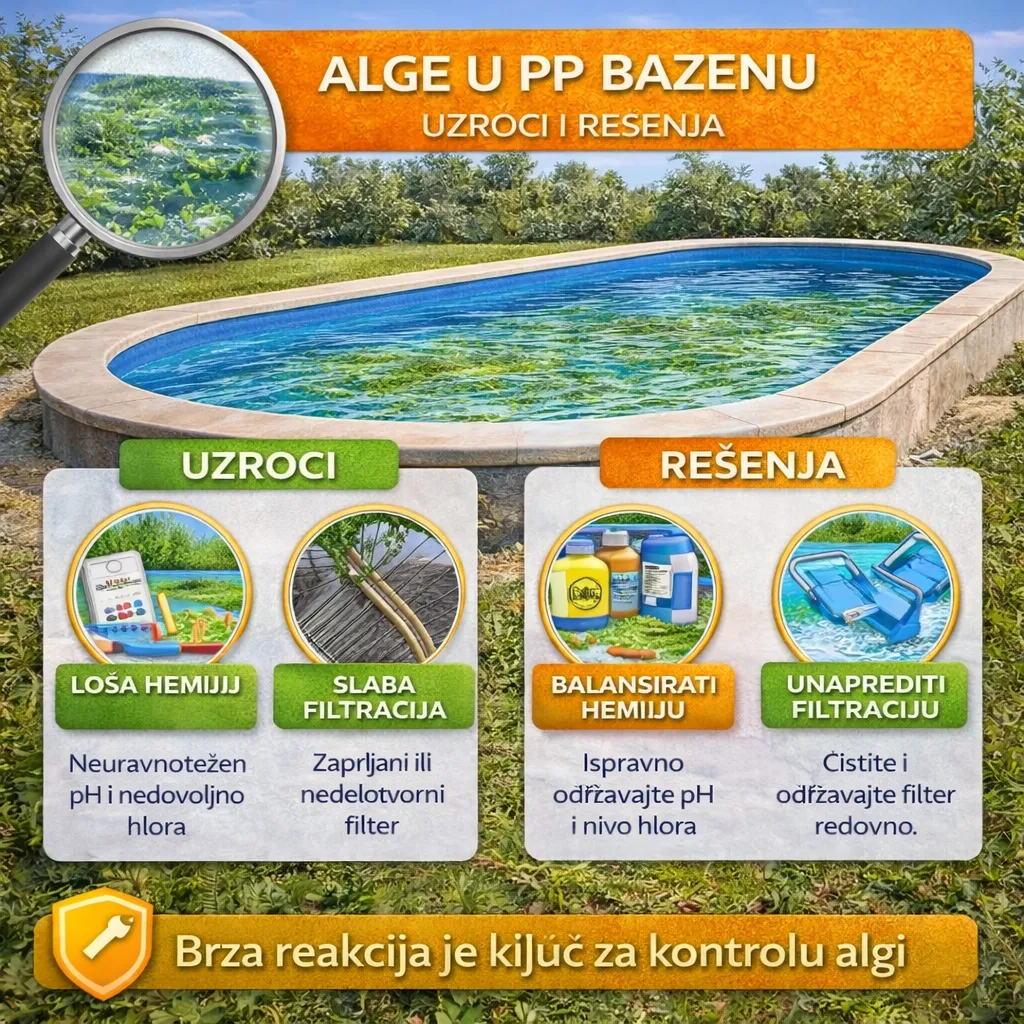
Algae is one of the most common problems in swimming pools, including PP (polypropylene) pools. The good news is that PP material itself is not the cause of algae. Algae develops because of water conditions: insufficient disinfection, incorrect pH balance, poor filtration, or dead zones with inadequate circulation. Once the true cause is identified, the solution is generally swift and predictable.
How to recognise algae?
Algae can appear in various forms. The most common signs are a slippery surface, greenish or cloudy water, and deposits on the floor or in the corners. They typically appear first in areas with weaker circulation.
Most common causes of algae
1) Low disinfection level
If the free chlorine (or its equivalent in electrolysis systems) is too low, algae gets the opportunity to develop. This frequently occurs when the pool is heavily used, the water temperature is high, or filtration run times are too short.
2) Incorrect pH
pH directly affects the efficacy of chlorine. When the pH is too high, chlorine does not work as it should and algae develops more easily. This is why a stable pH (typically 7.2–7.6) is the foundation of prevention.
3) Insufficient filtration and poor circulation
Filtration must run long enough for the entire pool volume to pass through the system multiple times per day. Where dead zones exist without water movement, algae appears there first (corners, steps, behind benches, shallow areas).
4) High water temperature and organic load
Warm water accelerates algae growth. In addition, sweat, cosmetics, pollen, and dust increase the organic load and deplete disinfection.
5) Inadequate cleaning and a dirty filter
A clogged filter and poor maintenance (without backwashing) reduce flow rate and filtration efficiency. Under such conditions, the water may appear normal, but problems quickly return.
How to eliminate algae – a practical plan
Step 1: Mechanical removal
Brush the walls, floor, steps, and all transitions. The aim is to dislodge the algae from the surface and draw it into the filtration system.
Step 2: pH correction
Before applying disinfection treatment, bring the pH into the optimal range, otherwise the shock treatment may be ineffective.
Step 3: Shock disinfection treatment
Carry out chlorine shock treatment or an intensified regime in electrolysis systems, according to the system type. Afterwards, run filtration for an extended period.
Step 4: Filtration and filter backwash
Filtration should run continuously until the water has stabilised. Then backwash and rinse the filter to flush out retained dirt.
Step 5: Flocculation if required
If the water remains cloudy due to fine particles, a flocculant may be used (in accordance with the filter type) to bind particles together and remove them through filtration.
Prevention: how to stop algae returning
maintain stable pH and a consistent disinfection level,
extend filtration run times on hot days and under heavier bather loads,
brush critical zones regularly (corners, steps, benches),
clean skimmer baskets regularly and backwash the filter,
use a cover when the pool is not in use (less contamination, less UV degradation of disinfectant).
PP surface and algae
PP is smooth and non-porous, which is an advantage because algae struggles to take hold in the surface. This means that a PP pool, with proper maintenance, can typically be restored to clear water more easily than pools with more porous surfaces.
Conclusion
Algae in a PP pool is a consequence of water conditions, not of the material. The most common causes are low chlorine, incorrect pH, and insufficient filtration. The solution is systematic: mechanical cleaning, pH correction, shock treatment, and extended filtration. Once a stable maintenance routine is established, algae ceases to be a problem.