
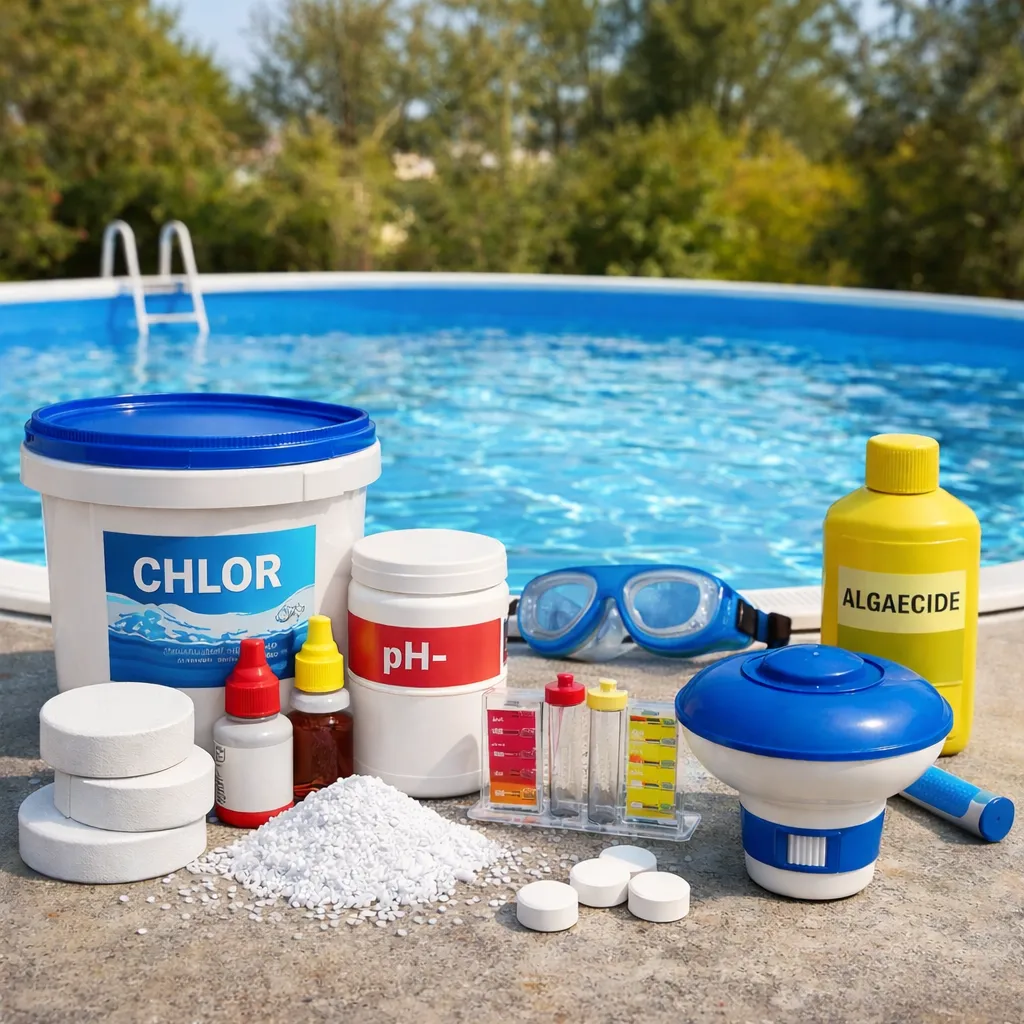
Chemical consumption in a PP (polypropylene) pool is a topic surrounded by unrealistic expectations. A PP pool can be easier to maintain thanks to its smooth, non-porous surface, but chemicals are still necessary — because chemistry is not there "for the pool" but for the water. The aim is stable disinfection, stable pH, and clear water throughout the entire season.
What does chemical consumption depend on?
There is no single fixed consumption figure that applies to all pools. Usage depends on several factors:
pool volume (m³) and water temperature,
number of bathers and intensity of use,
UV radiation and location (sun, wind, dust),
whether a cover is used (less contamination and UV load),
filtration quality and pump run time,
type of disinfection (chlorine or electrolysis),
fill water quality (hardness, metals, initial pH).
What is most commonly consumed?
pH correction (pH minus / pH plus): almost always required, particularly in summer.
Disinfection (chlorine or electrolysis): ongoing consumption depending on load and temperature.
Algaecide: preventively or as needed, depending on the maintenance regime.
Flocculant: occasionally, when clarification of fine particles is required.
How does a PP pool affect chemical consumption?
The PP surface is smooth and non-porous and does not absorb contaminants. This means dirt adheres less readily and cleaning is easier. In practice, PP pools often require fewer "corrections" than more porous surfaces, but they do not eliminate the need for chemicals.
Realistic expectations in practice
Realistically, chemicals are always used during the season in a private pool. What can be optimised is quantity and consistency:
stable pH reduces disinfectant consumption,
adequate filtration reduces the need for shock treatments,
a cover reduces UV-induced chlorine loss and contamination ingress,
dosing automation reduces "errors" and unnecessary consumption.
Most common mistakes that increase chemical consumption
neglecting pH values,
insufficient filtration run time,
no pool cover (chlorine degrades faster under sunlight),
dosing by guesswork instead of measurement,
delayed response to the onset of algae or cloudiness.
Conclusion
A PP pool can simplify maintenance, but cannot eliminate the need for chemicals. Chemical consumption depends on the water, conditions, and usage regime. The best practical results are achieved through stable pH, good filtration, a pool cover, and — where possible — dosing automation. With these in place, consumption becomes predictable, the water remains stable, and the pool is stress-free throughout the entire season.