
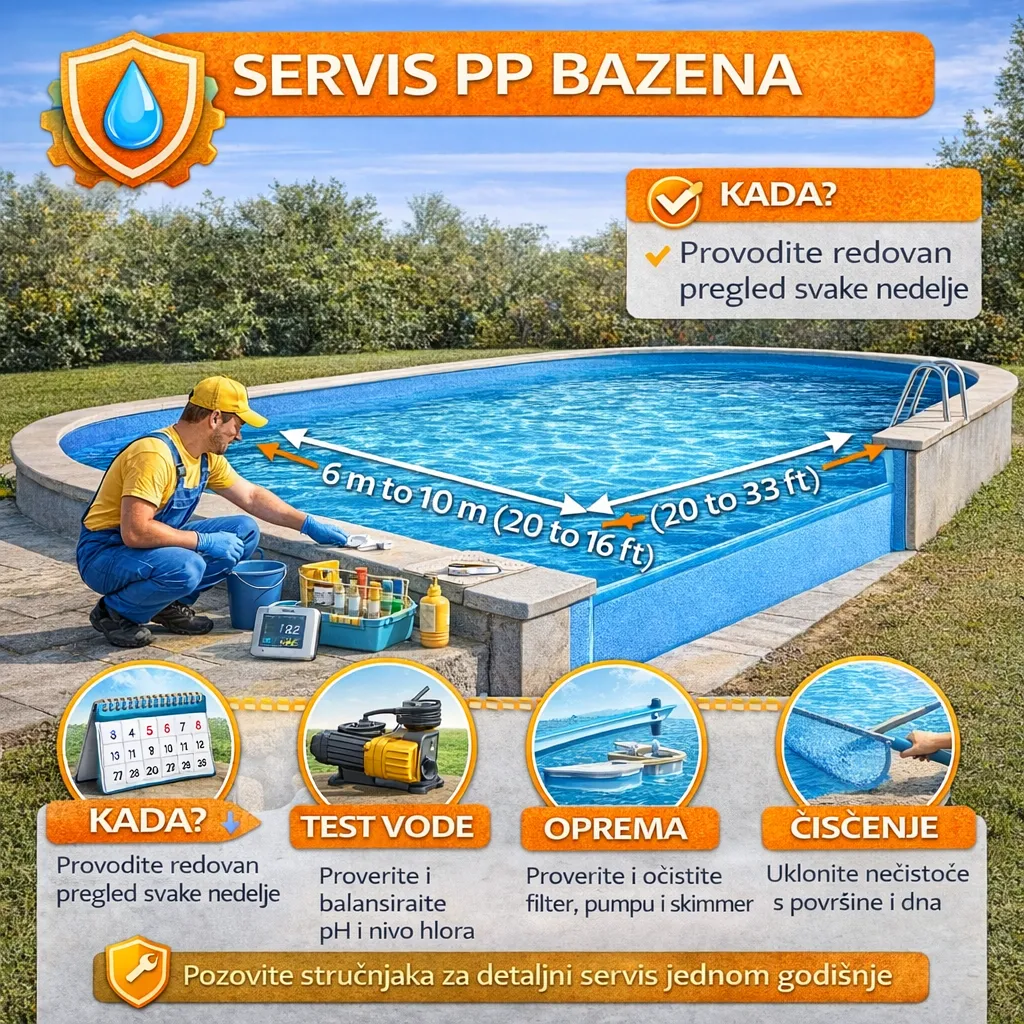
Servicing a PP (polypropylene) pool refers to both planned and unscheduled work carried out to ensure correct equipment operation, stable water quality, and the long-term reliability of the entire system. It is important to note that in practice, servicing most often concerns the equipment – pump, filter, heating, automation, built-in fittings – whilst the PP shell is typically problem-free provided the pool has been professionally manufactured and installed.
When is service required?
at the start of the season: after opening, equipment check and operational stabilisation,
during the season: when problems arise (reduced flow, cloudiness, unusual pump noises, leaks),
before winterising: preparing the system and verifying that everything is in order before shutdown,
as required: after severe storms, power cuts, or unusual fluctuations in water level.
Most common reasons for service
pump drawing air, losing flow rate, or making noise,
filter at high pressure or filtering poorly,
leaks at built-in fittings or joints,
heating problems (heat pump or heat exchanger),
faults in automation, dosing pumps, or electrolysis systems.
What a standard service looks like (steps)
1) Visual inspection of the system
Inspection of equipment, valves, connections, filter pressure gauge, leaks, and condition of electrical installations. The pool water level is also checked.
2) Flow check and pump inspection
The skimmer basket and pump pre-filter basket are cleaned, the lid and seal are inspected, the actual flow rate is measured, and the pump is listened to for noise or vibration.
3) Filter service
A backwash and rinse cycle is carried out, the pressure gauge and condition of the filter media are checked. If required, the sand or glass media is replaced, or a more thorough cleaning is performed.
4) Disinfection and automation check
pH and disinfection levels (chlorine or electrolysis) are checked, sensor probes are calibrated (if fitted), dosing hoses and injectors are inspected, and operating mode settings are reviewed.
5) Heating check
For heat pumps: flow rate, operating mode, inlet/outlet temperature, and unobstructed airflow are checked. For heat exchangers: the hydraulic connection and valves are inspected.
6) Check of built-in fittings and seals
The skimmer, return jets, pool light, and main drain are inspected (where accessible), including tightening and any signs of leakage.
What the pool owner can do themselves, and when to call a technician?
owner can do themselves: cleaning baskets, basic backwash, measuring pH/chlorine, visual inspection,
call a technician: leaks, electrical problems, automation faults, pump failure, heating problems, suspected plumbing issues.
Most common mistakes
delaying service until a problem becomes more serious,
"treating" problems with chemicals instead of addressing the root cause (flow, filter),
incorrect handling of valves and the filter,
no regular inspection of seals and connections.
Conclusion
Servicing a PP pool is a combination of flow, filter, disinfection, heating, and fitting checks. The best service is one that prevents breakdowns: regular inspection, proper maintenance, and timely intervention. This keeps the PP pool running reliably and without surprises throughout the entire season.