
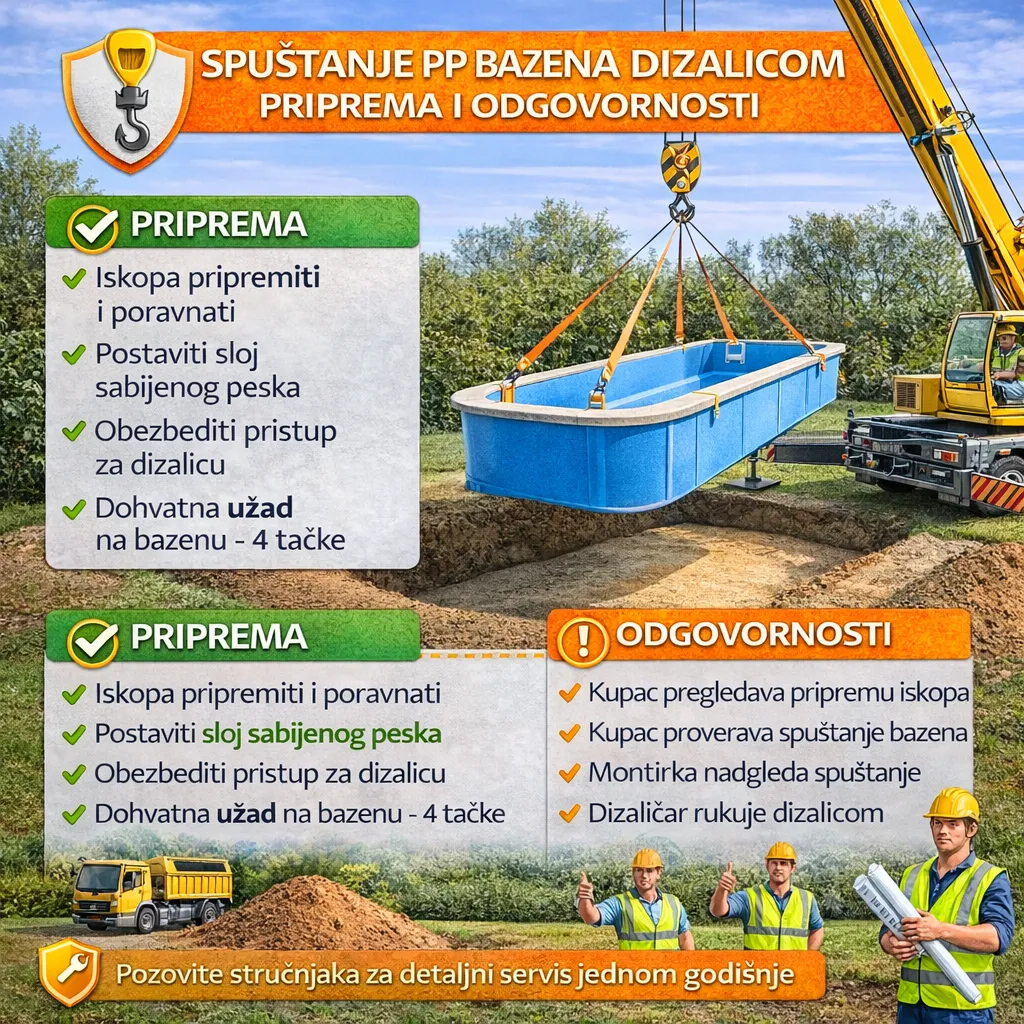
Lowering a PP (polypropylene) pool with a crane is a critical phase of installation, as it involves handling a large and valuable pool shell. Thorough preparation and clearly defined responsibilities prevent damage, delays, and additional costs.
Why is crane lowering demanding?
A PP pool is most commonly delivered as a completed shell. Its dimensions, weight, and shape require precise positioning and stable lifting without twisting or impacts.
Preparation before crane arrival
excavation completed and cleaned, with the concrete base slab prepared,
clear and safe access for the crane and transport vehicle,
obstacles removed (fencing, branches, cables),
work zone clearly marked and unauthorised persons excluded.
Crane selection and lifting equipment
The crane's lifting capacity and reach must be matched to the weight of the pool and the distance from the unloading point to the excavation. Appropriate lifting straps (slings) are used that do not damage the PP material.
The lowering process itself
The pool is lifted evenly, without sudden jerks. During lowering, care is taken to ensure that the pool does not bear against the excavation edges and that it is correctly oriented in accordance with the installation plan.
Who is responsible for what?
Client: provides site access, site preparation, and frequently the crane (unless agreed otherwise),
Manufacturer/installer: provides lifting instructions, ensures correct rigging, and supervises the lowering,
Crane operator: responsible for the safe operation of the crane and compliance with regulations.
Most common mistakes
crane with insufficient capacity or incorrectly positioned,
use of inadequate straps that may damage the pool,
unprepared excavation or obstacles along the lowering path,
lack of coordination between the parties involved.
Conclusion
Lowering a PP pool with a crane requires planning, good communication, and professional execution. When preparation and responsibilities are clearly defined, the pool is safely set in place and a solid foundation is established for the remaining installation work.