
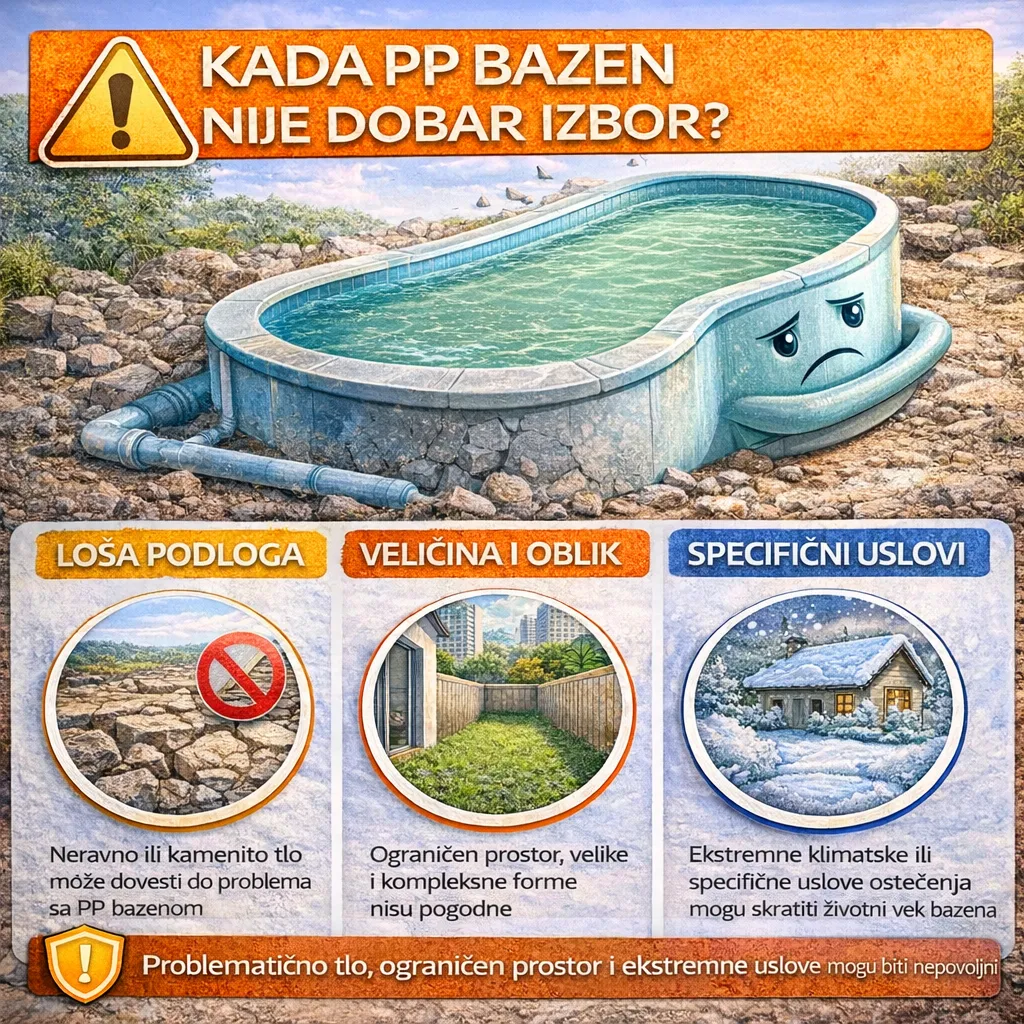
A PP (polypropylene) pool is an excellent solution for many residential projects, but it is not a “magic wand” for every situation. The biggest mistake is choosing PP only based on price, or expecting the material to “forgive” poor site preparation, groundwater issues, or undersized equipment. In real-world conditions, PP performs best when the project is executed as a system: a quality shell, correct installation, proper drainage, and a clear maintenance plan.
Below are situations where a PP pool can be a poor choice – or more precisely, situations where it requires additional conditions, more serious engineering, or where it may be smarter to consider alternative approaches.
1) When proper base preparation and installation are not possible
A PP pool requires a stable base, accurate leveling, and correct backfilling while filling the pool with water to balance pressure. If the project is done “fast and loose” without level control, correct layers, and a proper plan, the risk increases. In such conditions, the problem is not PP itself, but unprofessional installation – yet the outcome is the same: stress, deformation, and long-term issues.
2) When groundwater is ignored and real drainage is not feasible
If the site has rising groundwater levels or soil that retains moisture, drainage is not optional – it is mandatory. Without drainage, water pressure around the pool can stress the structure and the surrounding area and create serious long-term problems. If proper drainage cannot be built, a PP pool is not a smart choice, because a pool is not isolated – it “lives” in the soil environment.
3) When access and installation logistics are practically impossible
PP pool shells are most often delivered as a finished unit. That requires organized transport and a way to place the shell into the excavation. If access is extremely limited (no space for a truck, no crane or machinery access, very narrow passages, obstacles), installation can become complicated or so expensive that the project loses its logic. In such cases, logistics must be planned early, or an alternative concept considered (for example, on-site fabrication in segments, if that is part of your workflow).
4) When “premium” results are expected without investing in the surroundings
A PP pool can look top-tier, but the premium effect comes from the complete execution: coping, decking, terrace, lighting, the technical room, and details. If the plan is just “a hole + a shell” with an improvised environment, the result will not feel premium regardless of pool type. The problem is not PP – it’s the expectation that the pool alone will create the full aesthetic.
5) When an extremely specific final look is required that is not a PP surface
PP has its own aesthetic: clean, modern, and defined by the color of the material. If the client wants a very specific texture or look that implies a different finishing system (for example, a particular stone-like effect), the PP surface may not match the goal unless the design is planned accordingly through surrounding materials and detailing. The key is expectation: PP is the finished interior surface, and it should be chosen with that in mind.
6) When the goal is the cheapest possible build with major quality compromises
A PP pool is not a good choice if the plan is to “save at all costs” on material, welding, reinforcements, and installation. That produces a pool that looks like PP from the outside but lacks stability and longevity. Most bad stories about PP pools come from exactly these projects: low-grade sheets, poor welding, weak reinforcements, wrong installation, and undersized equipment.
7) When there is no realistic maintenance plan
Every pool requires discipline: filtration, water chemistry, cleaning, and winterization. If someone expects a “zero-maintenance pool,” disappointment is guaranteed – regardless of pool type. A PP pool can make maintenance easier due to the smooth surface, but it does not eliminate water-care rules. If there is no willingness for basic care, it’s better to postpone the project or include automation and service from the start.
8) When the project needs serious engineering but engineering is avoided
Some sites (slopes, unstable soil, extreme groundwater, close proximity to structures) require stronger engineering solutions. If the owner avoids proper design and structural measures, the risk is high. A PP pool can be part of the solution, but only when the project includes correct engineering and appropriate construction measures.
How to make the right decision
A smart approach is to ask a few questions before choosing a system:
Does the site have groundwater and can drainage be built properly?
Is access available for transport and safe placement of the shell?
Can a stable base and correct backfilling be executed?
Is the budget realistic for quality material, reinforcements, and equipment?
Is there a maintenance plan (or automation/service)?
Conclusion
A PP pool is not a good choice when professional installation is skipped, groundwater and drainage are ignored, logistics make placement unrealistic, or when the project is built at the lowest quality just to reduce the initial price. When PP is executed professionally it is excellent – but when project fundamentals are ignored, any pool becomes a problem, including PP. The key is a realistic, system-based approach, because that is where PP delivers its strongest advantages.