
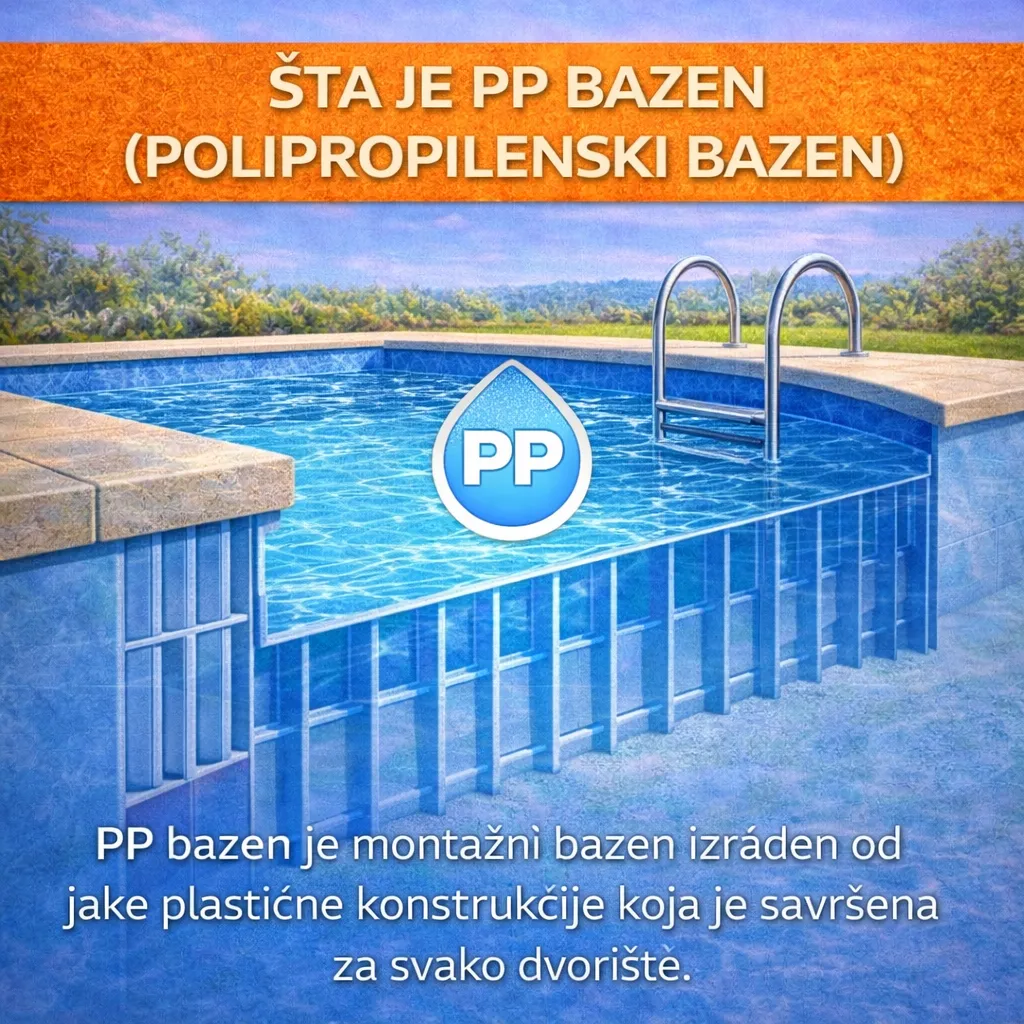
A PP pool is a pool shell made of polypropylene (PP) – a high‑quality thermoplastic widely used for modern residential pools. When we say “PP pool,” we mean a complete, watertight pool shell that is formed by welding PP sheets into a single, sealed structure. After fabrication, the shell is installed into a prepared excavation, connected to the pool equipment (skimmer, return jets, filtration, lighting, heating), and finished with the surrounding deck and landscape.
The key advantage of the PP concept is that the material itself is the finished, watertight surface. In other words, the shell does not rely on extra liners, tiles, or coatings to hold water. The surface you see and touch is also the structural body, which is why build quality (welds, reinforcements, base preparation, insulation, and correct installation) is critical for long-term performance.
What material is a PP pool made from?
Polypropylene is a durable, flexible, and chemically stable polymer. In pool manufacturing it is used as sheets of different thicknesses (commonly 6–10 mm, depending on the pool’s size and structural design). These sheets are cut to shape and welded using specialized techniques. PP is well suited for precise customization (steps, benches, shallow areas), it handles pool chemistry well, and it does not absorb water.
It is important to distinguish between generic PP and PP sheets intended for long‑term outdoor use: sheet quality, UV stabilization, material consistency, and compatible welding rods/electrodes all directly affect the final result.
How is a PP pool made?
Manufacturing a PP pool combines accurate cutting, proper welding, and structural planning. The shell is assembled from the floor and walls, then reinforced with ribs that stabilize the walls and reduce the risk of deformation. Extra attention goes to details such as inside and outside corners, transitions, steps and benches, as well as the points where components are installed (skimmer, returns, lights, drains).
Welds are not only about looks – they are both the mechanical bond and the waterproof seal. High‑quality welds are continuous and clean, without pores, gaps, or overheated areas. The best results come from correct technique: stable temperature, consistent speed, proper pressure, the right tool, and the right welding material.
Why choose a PP pool for a residential project?
PP pools are popular because they offer an excellent balance of quality, installation speed, and long‑term reliability. Since the shell is built in advance, installation is typically much faster than systems that require multiple layers and wet construction phases. With a properly prepared base and correct installation, a PP pool delivers a stable structure and a smooth, attractive finish that is easy to maintain.
Watertight without extra linings: The PP surface is the finished interior – no liner, tiles, or coatings are needed to make it watertight.
Resistance to pool chemicals: The material performs well with standard disinfection systems (chlorine, salt electrolysis) when water parameters are kept in range.
Smooth, comfortable surface: Less dirt adhesion, easier cleaning, and a pleasant feel.
Design flexibility: Steps, benches, and shallow zones can be integrated to suit the client.
Faster delivery: Fewer wet phases and shorter build timelines compared to complex finish systems.
What matters most for a “proper” PP pool?
The difference between an average PP pool and a top‑tier one is often in the details – especially in fabrication and installation. A great PP pool is not only the shell; it is the entire system: base, insulation, drainage, correct backfilling, coordinated filling with water during backfill, and correctly sized equipment.
Base and leveling: A stable, flat, accurately leveled base reduces structural stress.
Insulation: Insulating the bottom (e.g., XPS) and the sides (e.g., EPS) reduces heat loss and increases comfort, especially for heated pools.
Drainage: Proper groundwater and moisture management protects both the structure and the surrounding area.
Reinforcements: Correctly engineered ribs and details help prevent wall deformation.
Component installation: Skimmers, returns, lights, and drains must be installed correctly and sealed.
PP pools and maintenance
Maintaining a PP pool is straightforward when water balance and filtration are set correctly. The smooth PP surface makes cleaning easier, and good circulation keeps the water clear. The essentials are stable water parameters: pH within the recommended range, correct disinfection dosing, and regular mechanical cleaning (net, brush, vacuuming, and a robot if needed).
Conclusion
A PP pool is a modern solution for residential pools: fast to install, durable, and visually clean, with a finished surface that is also the structural body. When built with quality materials and installed according to best practice (base, insulation, drainage, equipment), a PP pool provides years of enjoyment with sensible maintenance and high comfort.
To see what this looks like in practice, visit our custom family PP pools page.