
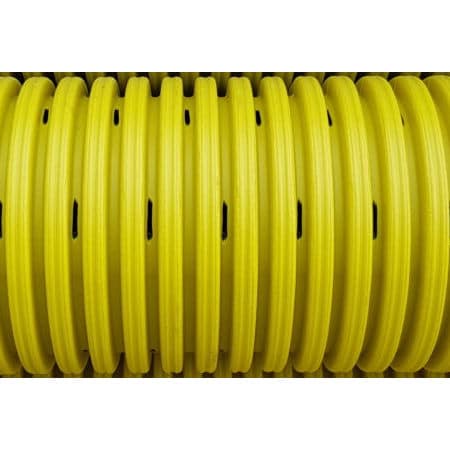
Pool drainage is a system for controlled removal of groundwater, rainwater and infiltration water from the area around and beneath the pool shell. Its primary function is to prevent water accumulation under the pool, thereby eliminating dangerous forces acting on the structure.
Without proper drainage, water creates hydrostatic pressure and can cause:
- lifting of the pool shell (the uplift effect), especially when the pool is empty or partially drained
- deformation, cracking and shifting of layers
- waterproofing separation and permanent moisture in the pool zone
- expensive repairs or even complete reconstruction
When is drainage mandatory?
Drainage is mandatory in the following situations (and in practice is often installed preventively):
- high groundwater level
- clay, compacted or poorly permeable soil
- sloped terrain, atmospheric water retention or poor runoff
- in-ground pools (no exceptions)
What does proper pool drainage look like?
1) Drainage layer beneath the pool
The foundation consists of a drainage bed made of crushed stone/gravel (e.g., 16–32 mm), typically 20–30 cm thick. This layer must be uniform, stable, yet permeable — allowing water a "corridor" toward the drainage pipes.
2) Perforated drainage pipes
Into the drainage layer, perforated pipes are placed (often Ø100 mm or as specified), around the pool perimeter and as needed in a grid beneath the pool. The key is that pipes have proper slope toward the collection point and are correctly positioned.
3) Geotextile (filter fabric) – the detail that makes the difference
Geotextile prevents fine soil particles from entering the crushed stone and pipe perforations. Without it, drainage gradually loses function as the layer becomes "silted" and stops allowing water through.
4) Drainage sump (inspection / soakaway / with pump)
The system terminates in a drainage sump that enables monitoring and water removal:
- passive (gravity-fed) — if terrain and sewer/outlet conditions allow
- active — submersible pump when there's no reliable gravity outlet
The sump must be accessible for inspection and positioned to actually "collect" water from the drainage (below the critical level).
Hydrostatic pressure – the greatest enemy of an empty pool
When the pool is drained, groundwater can become the dominant force. Even a relatively small rise in groundwater can produce enormous buoyant force on the pool floor.
Most common mistakes (and how to avoid them)
- "The ground is dry, no drainage needed" (conditions change seasonally and over years)
- pipes without slope or without a clear collection point
- omitted geotextile
- no inspection/drainage sump (no monitoring and servicing possible)
- drainage "ends nowhere" — without actual outlet or pump
Conclusion
Pool drainage is not an add-on, but structural insurance. When done properly, it protects the pool from uplift, moisture and deformation — and prevents failures that are later repaired slowly, with difficulty and at great expense.