
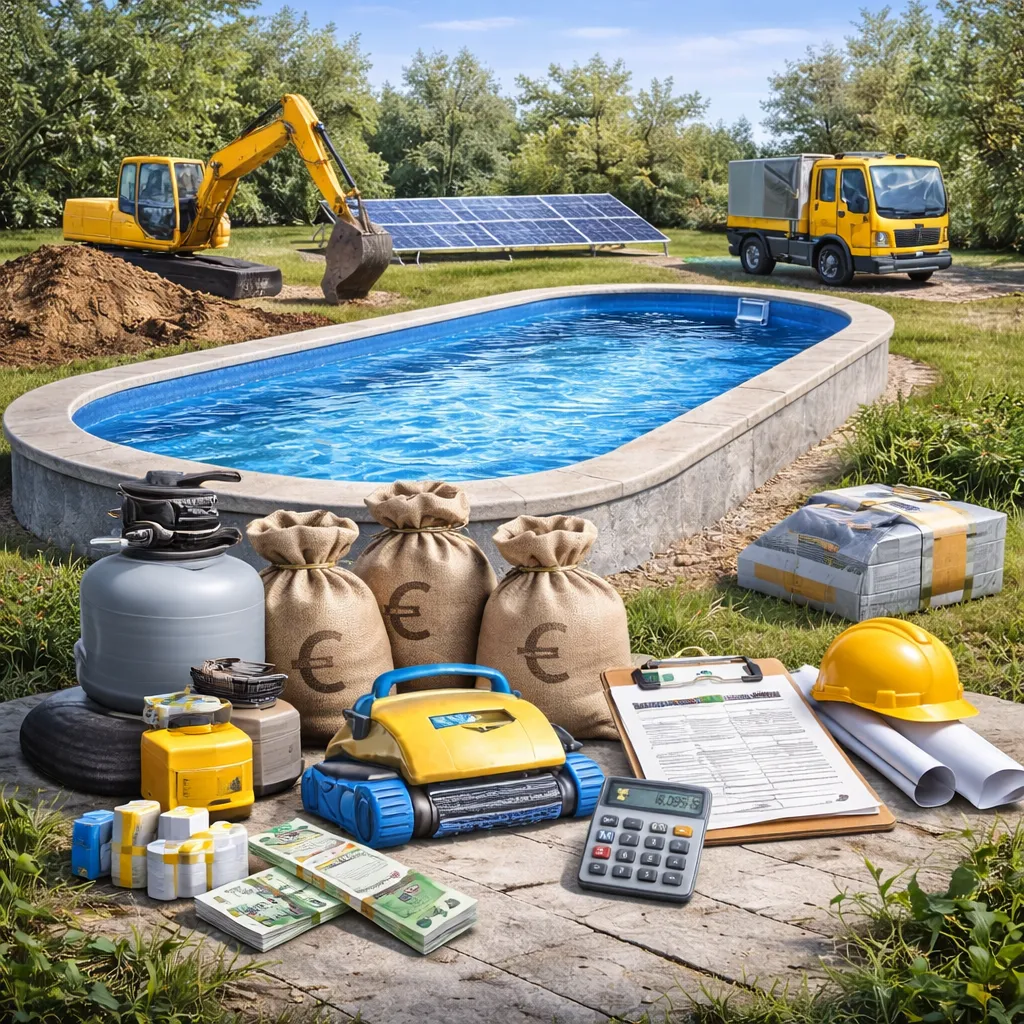
The price of a PP (polypropylene) pool cannot be reduced to a single figure. Two pools of identical dimensions can vary significantly in cost depending on the construction, equipment, and method of installation. Understanding the real price factors helps a buyer to make a well-informed decision and avoid unpleasant surprises.
1) Pool dimensions and volume
A larger pool requires more material, a stronger structure, more powerful equipment, and more labour hours. So the price rises with size, but not in direct proportion to volume: it depends on the area of PP sheets, reinforcements, equipment and labour, as well as on the complexity of the shape.
Calculate an estimated price for your pool size – the calculator shows the price for the dimensions and equipment you choose.
2) PP sheet thickness and structural design
Different sheet thicknesses (6 / 8 / 10 mm) and the method of reinforcement directly affect the price. More substantial structural engineering means greater material and labour consumption, but also long-term safety.
3) Welds and manufacturing technology
Quality welding (manual + extrusion welding where required) demands skill and time. Strong, neat welds are not merely an aesthetic matter – they are structural integrity.
4) Pool type: skimmer or overflow
Overflow pools are more expensive due to the additional hydraulics, overflow channels, and balance tank. Skimmer systems are simpler and more cost-effective for most residential applications.
More about overflow pools: infinity pools with overflow.
5) Equipment and technical systems
pump and filter (sized to pool volume),
disinfection (chlorine, electrolysis, automation),
heating (heat pump, heat exchanger),
lighting, return jets, steps, comfort features.
6) Insulation and energy solutions
Insulating the base and walls, along with a high-quality thermal cover, increases the initial cost but reduces long-term heating and maintenance expenses.
7) Installation and site conditions
Difficult terrain, groundwater, drainage requirements, or specific logistical challenges affect installation costs. Professional installation is part of the overall value, not a cost to be skipped.
8) Additional elements
benches, sun shelves, hydrotherapy jets,
roller cover systems and safety covers,
advanced automation.
Why "cheapest" is often not the best value
A low initial price frequently means compromises in material, structural design, or installation quality. This later leads to higher costs, repairs, and frustration.
Conclusion
The price of a PP pool depends on many factors: dimensions, construction, equipment, and installation conditions. The right choice is a pool that is technically sound, tailored to your needs, and transparently specified – because a quality PP pool is not a cost, but a long-term investment.