
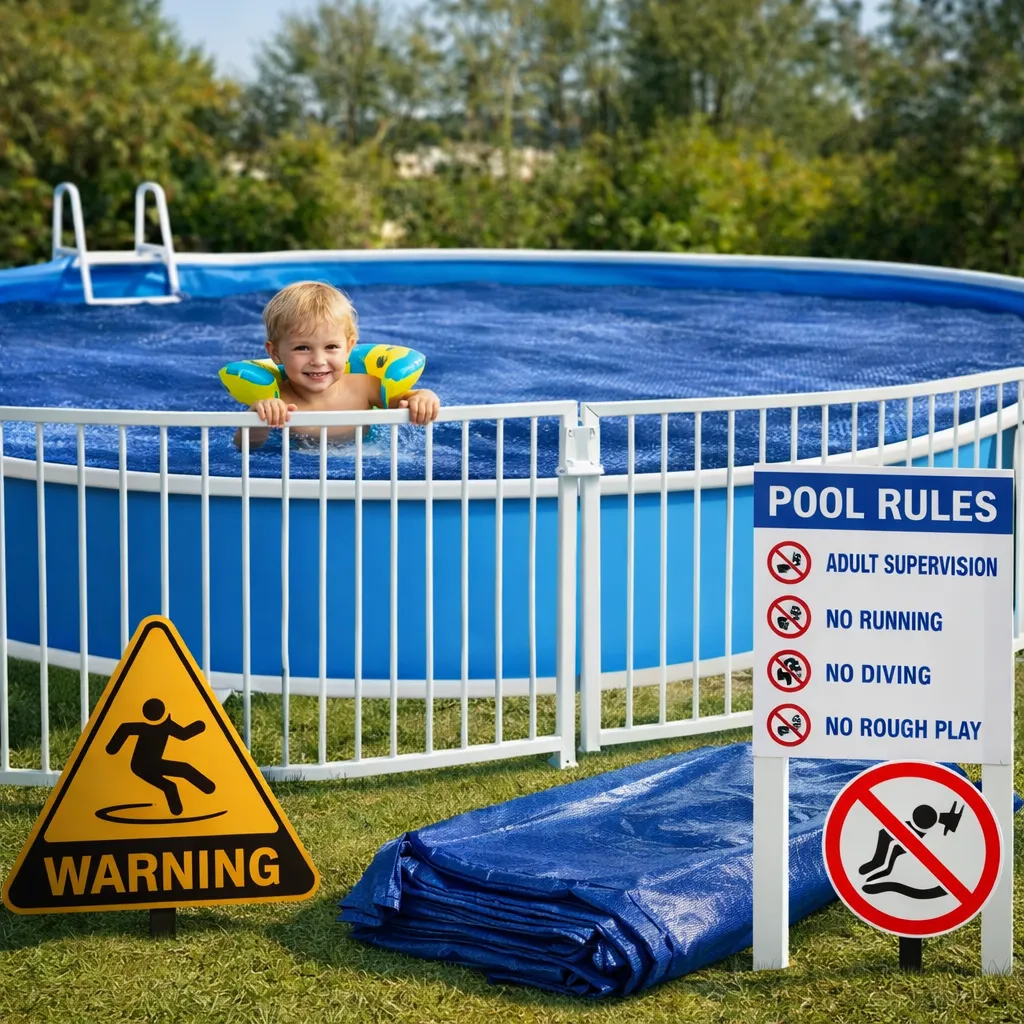
Safety is the most important topic for any pool, especially when children are present in the household. PP (polypropylene) pools are safe when properly designed and when the fundamental rules of use are observed. The greatest risks do not come from the pool material itself, but from inattention, the absence of physical barriers, and poor organisation of the space around the pool.
1) Children and the pool: supervision is rule number one
No fence and no cover can replace active supervision. When children are present, one adult must be solely responsible for supervision — without a phone and without distractions.
never leave a child alone near the pool,
establish clear household rules before entering the pool area,
always explain the risks to children, even if they can swim.
2) Fences and access control
A physical barrier is one of the most effective preventive measures. The ideal solution is a fence around the pool with a self-closing, lockable gate. Access control is particularly important when the pool is not under constant supervision.
3) Covers: summer, winter, and safety covers
A summer (thermal) cover is not a safety cover and does not prevent a fall into the pool. If safety is the primary objective, solutions must be considered that physically bear a load or systems that prevent access to the water.
summer/thermal: retains heat and keeps the water clean, but offers no protection against falling in,
winter: protects the pool out of season, but is not always a safety cover,
safety covers: designed to prevent accidental entry (depending on the system).
4) Non-slip surfaces and organisation of the pool area
The area around the pool should be non-slip, with good drainage and free from obstructions. Wet tiles and smooth surfaces are a common cause of injuries. A tidy pool surround reduces the risk of tripping and falling.
5) Pool behaviour rules
no running around the pool,
no diving into shallow areas,
use steps and handrails,
do not use the pool under the influence of alcohol.
6) Lighting and visibility
Good lighting of the pool and its surroundings reduces risk during evening hours. Visibility of the pool floor is important both for safety and for monitoring water cleanliness.
7) Technical safety: drains, electricity, equipment
Built-in elements such as floor drains should be of the safety type (anti-entrapment protection). Electrical installations must be professionally executed, with appropriate protection devices (RCD/FID) and correct earthing.
Conclusion
PP pool safety rests on three pillars: supervision, physical barriers, and clear rules. Fencing and access control, appropriate covers, non-slip surfaces, and disciplined behaviour make the pool safe for the whole family. PP material is reliable, but safety always depends on how the pool is organised and on the habits of its users.