
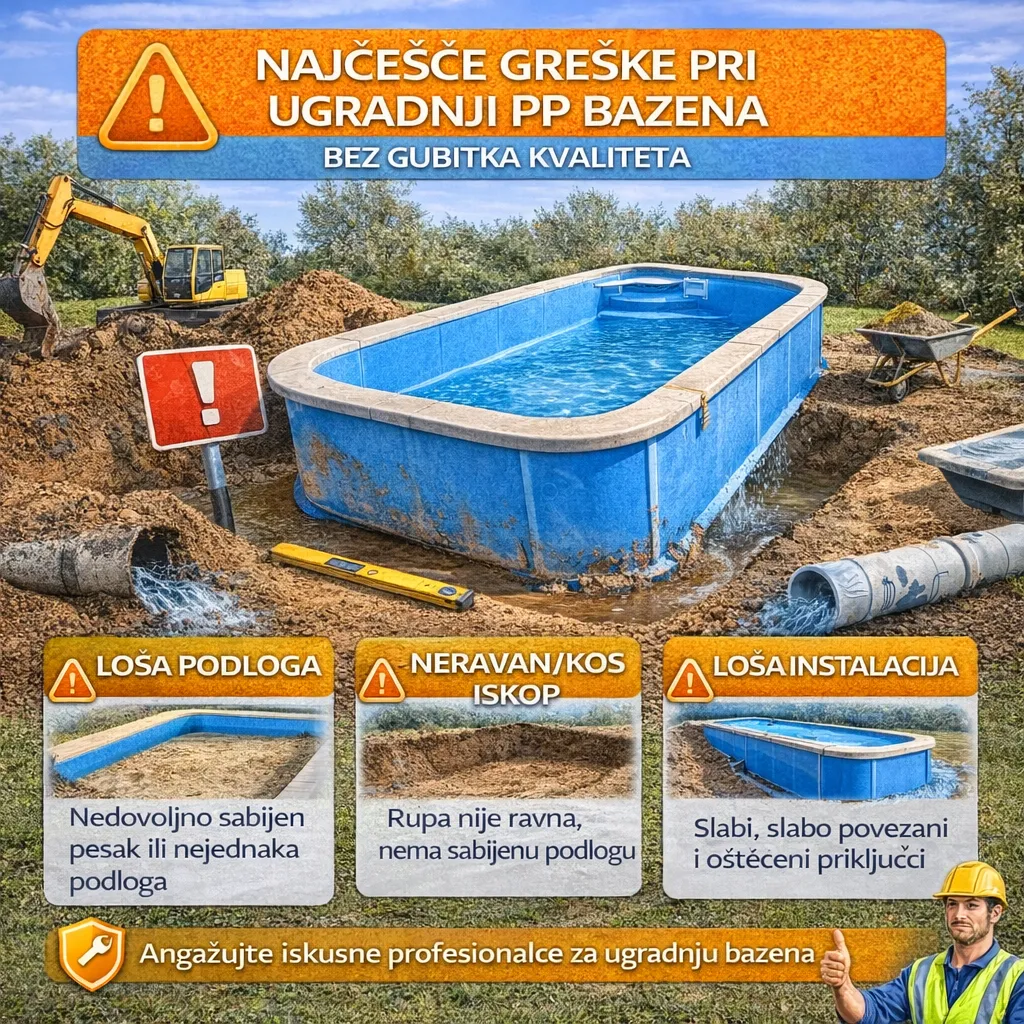
Installation is just as important as the PP (polypropylene) pool shell itself. Even a perfectly manufactured pool can develop problems if the base is poorly prepared, drainage is missing, or backfilling is carried out incorrectly. In practice, the greatest risks to structural stability and the long-term service life of the pool arise precisely during the installation phase.
1) Poor base preparation
A PP pool must "rest" on a proper base. If the concrete slab is not level, lacks adequate reinforcement, or is too weak, stresses and geometric distortions of the pool can develop.
Prevention: high-quality concrete slab, levelness, appropriate thickness and reinforcement.
2) Absence of drainage and ignoring groundwater
Groundwater can exert serious external pressure, particularly when the pool is empty or only partially filled. Without drainage, the risk of problems increases significantly.
Prevention: drainage system, sump/collection pit, planning based on soil conditions.
3) Incorrect backfilling (material and method)
The most common mistake is backfilling all at once or using the wrong material. If the pool is not filled with water simultaneously with backfilling, the walls can be subjected to uneven pressures.
Prevention: layer-by-layer backfilling, simultaneous filling with water, proper compaction.
4) Inadequate protection of walls and reinforcements
Reinforcements and pipes must be protected during backfilling. Sharp stones, poor-quality backfill material, or impact from machinery can damage the structure.
Prevention: quality backfill material, careful working practices, protection of critical zones.
5) Poor construction of the pool deck and surround
If the pool deck or paving rests on the pool without a proper structural solution, it can transfer loads and create stresses at the pool edges.
Prevention: pool deck as an independent structure, expansion joints, proper reinforcement.
6) Incorrectly installed hydraulics and plumbing
Pipework must not put strain on the built-in fittings. Poorly executed plumbing leads to leaks, air ingestion, and subsequent failures.
Prevention: stress-free plumbing runs, quality fittings, leak testing before backfilling.
7) Draining the pool without understanding pressure dynamics
Under certain conditions (high groundwater), complete draining of the pool can be risky, as external pressure then becomes dominant.
Prevention: drain only when necessary and under controlled conditions, consult the installer.
Conclusion
The most common mistakes in PP pool installation relate to the base, drainage, and backfilling. Professional base preparation, proper drainage, and systematic layered backfilling with simultaneous water filling are the key steps that prevent deformation and long-term problems. When installation is done correctly, a PP pool remains stable and reliable for many years to come.
How we handle the base, reinforcements, welding and insulation is described in our technical construction standards.