
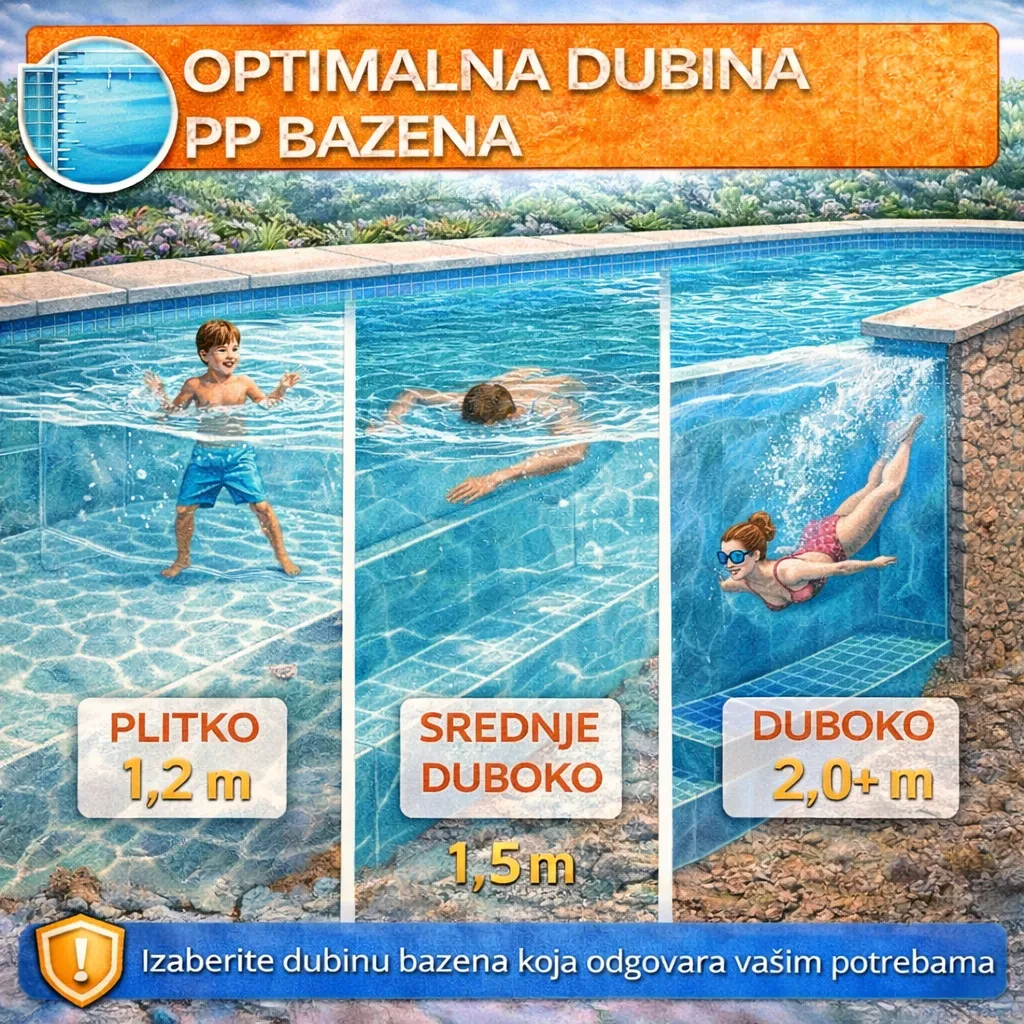
The optimal depth of a PP (polypropylene) pool depends on the pool's intended use, the profile of its users, how it will be used, and safety requirements. There is no single universally ideal depth, but in practice there are well-proven ranges that offer the best balance of comfort, safety, and cost.
Why does pool depth matter?
Depth directly affects safety, water volume, heating and maintenance costs, and the way the pool is used. PP pools offer great flexibility in the choice of depth, as the shell is manufactured to order.
Most commonly used depths for residential PP pools
1.20 m – 1.30 m: ideal for families with children, recreational bathing, and extended time in the water.
1.35 m – 1.50 m: the most common choice — a good compromise between swimming and standing.
1.60 m – 1.80 m: for more experienced swimmers and fitness swimming.
Constant depth or variable depth?
Most private PP pools have a constant depth, as it is simpler to use and maintain. Variable depth (gentle slope) is used less frequently and mainly where there is a clear need for distinct zones.
Safety considerations
For family pools, a depth at which most adults can stand in the water is recommended. Deeper pools require greater vigilance, especially when children are present.
Impact of depth on cost and maintenance
Greater depth means a larger water volume, more powerful filtration, more chemicals, and higher heating costs. For this reason, the optimal depth often also represents the most financially sensible choice.
Conclusion
For most private PP pools, the optimal depth is between 1.30 m and 1.50 m. This range offers the greatest flexibility, safety, and cost-effectiveness. The final decision should be tailored to the users and the intended use of the pool.