
The pH value of pool water is one of the most important parameters in maintaining PP (polypropylene) pools. It directly influences the effectiveness of disinfection, swimmer comfort, equipment longevity, and the preservation of the PP surface itself.
What is pH value?
pH value indicates whether water is acidic, neutral, or alkaline. The scale runs from 0 to 14, with pH 7 being neutral. Pool water is maintained slightly alkaline.
Optimal pH value for PP pools
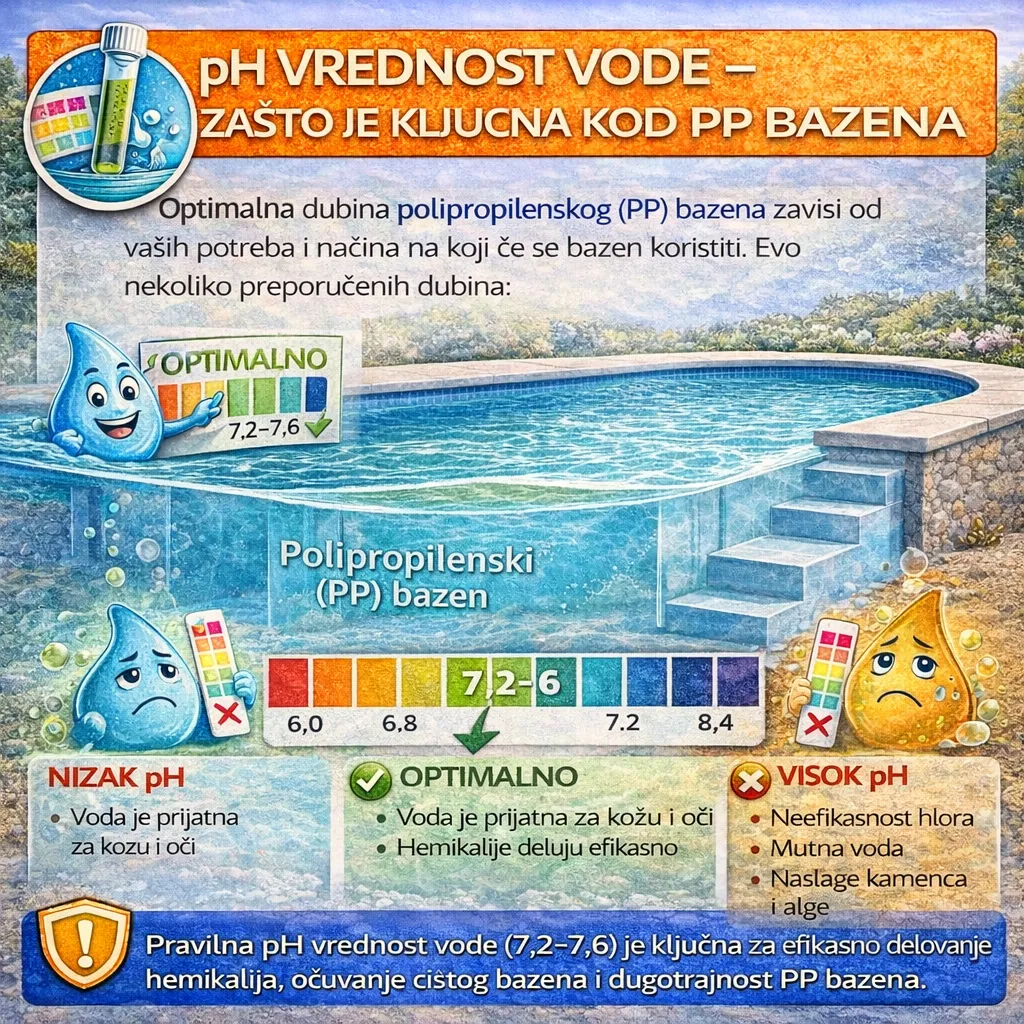
For PP pools, the optimal pH value is in the range of 7.2 to 7.6. Within this range, disinfectants work most effectively, and the water is comfortable for skin and eyes.
Why is pH critical for disinfection?
If pH is too high or too low, the effectiveness of chlorine and electrolysis drops dramatically. This frequently leads to the incorrect conclusion that "disinfection is not working", when the real problem lies in the pH balance.
Problems with low pH
irritation of eyes and skin,
accelerated corrosion of metal equipment components,
aggressive water that can damage installations.
Problems with high pH
reduced effectiveness of chlorine,
cloudy water and scale deposition,
unpleasant sensation of "heavy" water.
pH and PP material
PP material is chemically resistant, but a chronically poor pH balance affects seals, welds, and ancillary equipment over the long term. A stable pH extends the service life of the entire system.
How is pH value measured and controlled?
pH is measured using test strips, liquid test kits, or electronic probes. Correction is carried out by adding pH minus or pH plus products, either manually or automatically.
Automatic pH regulation
Modern PP pools are often fitted with automatic pH dosing pumps that maintain a stable level without the need for constant manual monitoring.
Conclusion
pH value is the foundation of proper disinfection and swimmer comfort in a PP pool. Without a stable pH balance, neither the best equipment nor the best disinfection regime can deliver the expected results.