
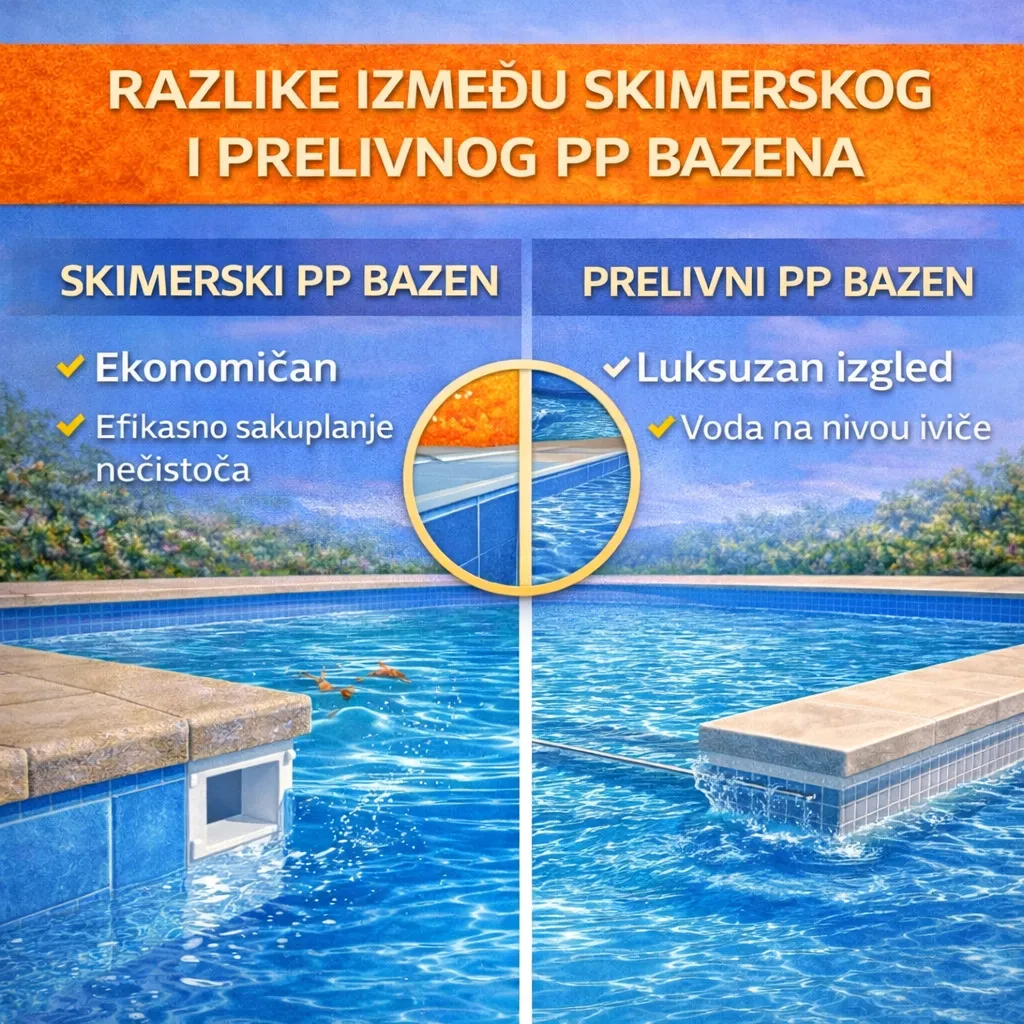
Skimmer and overflow PP (polypropylene) pools represent two fundamental water circulation systems. Although both can be built to equally high quality standards using PP material, the differences in how they operate affect aesthetics, cost, maintenance, and technical complexity.
How does a skimmer PP pool work?
In a skimmer pool, water is drawn through skimmers installed in the side walls of the pool. The water level sits several centimetres below the pool coping, and filtered water is returned via return inlets.
How does an overflow PP pool work?
In an overflow pool, water constantly flows over the edges into an overflow channel, from where it is directed to a balance tank, filtered, and returned to the pool. The water level is always flush with the pool coping.
Aesthetics and visual impression
Skimmer pool: classic appearance, water below the pool coping.
Overflow pool: luxurious appearance, perfectly level water line.
Technical complexity and equipment
Skimmer systems are technically simpler and require less additional equipment. Overflow systems include a balance tank, more pipework, and more advanced automation.
Maintenance and hygiene
Overflow pools remove surface contaminants more efficiently, whilst skimmer pools are simpler to maintain on a day-to-day basis.
Difference in cost
Skimmer PP pools are more affordable due to their simpler construction. Overflow PP pools are more expensive, but offer a higher aesthetic and technical standard.
Which system is the better choice?
The choice depends on the owner's priorities. Skimmer pools are practical and economical, whilst overflow pools are ideal for those who want superior aesthetics and maximum surface water cleanliness.
Conclusion
The difference between a skimmer and an overflow PP pool is not in the quality of the material, but in the concept of operation. Both systems, when correctly designed and executed, can provide a long-lasting and reliable pool.